



NCAA Football Betting Strategies: Guide to the Top Systems
- Betting Guide The Place To Win System Drive
- Betting Guide The Place To Win Systems
- Win Place Show Betting System
- Betting Guidethe Place To Win System
- Betting Guide The Place To Win System For Small Business
- Betting Guide The Place To Win System Error
College Football Betting Intro
When we talk about football, we usually think first of the NFL. It is after all America’s most popular sports organization.
As we discussed in our Intro to NFL Betting, the American Gaming Association estimated bettors to have wagered upwards of $4.7 billion dollars on the nation’s most-watched sporting event this past year—the Super Bowl.
And that’s just one estimate. When you look at the global numbers, this figure nearly doubles. Mint, a prominent financial planning website, estimates that bettors stake more than $8 billion every year on the Super Bowl alone.
- So with the 80/20 system you simply stake more on the place side of the bet than on the win and you will find that it will make a huge difference to the profit and loss sheet when you use it on a regular basis. The Ratio Of Staking. Well of course the ratio for the 80/20 system is to place 80% of the stake on the place and 20% on the win.
- The 1-3-2-6 system is relatively straight-forward – especially if you have any experience using other betting or card-counting systems. Here’s how this works: Place an even-money bet. For example, place a bet on black/red or even/odd in roulette. For the following steps, we’re going to say we made a $5 bet.
But the NFL is not the only league to garner such attention from bettors.
NCAA football is right up there with it.
You need to win more than 50% to win at sports betting. A typical NFL gambler must bet $11 to win $10, so he has to win 55% of the time to break even. A pro knows these number like the back of his hand. Once a Bettor, Twice a Pro. No one ever accomplished anything they didn’t try.
In 2014, Super Bowl XLIX only generated about 10,000 more bets than the most heavily bet college football game
In 2014, Super Bowl XLIX only generated about 10,000 more bets than the most heavily bet college football game: 122,370 compared to 112,644. And, according to CNBC, bettors stake between $60-70 billion in illegal wages on college football each year.
Since the NCAA decided to establish and expand their playoff format, bowl games and championships have proven to be hot opportunities for bettors.
Unlike the NFL, which plays almost all its games on Sunday, college football offers bettors the chance to wage on matchups happening throughout the week, including thirty plus matchups on Saturdays.
A greater slate of games means more money lines, more spreads, more chances to get some bang for your buck.
According to SportsInsights there was a point spread listed for 894 college football games in 2015. Meanwhile, in merely a handful of offshore sportsbooks, a grand total of 12,774,988 bets were placed during the college football season.
With so many options it’s easy to see why college football ranks as one of the most bet-on sports in America.
As part of this article, we will discuss the different types of bets you can make on college games as well as some helpful tips and strategies for maximizing your returns.
But before we get into all that, let’s first take a look at the basics of our very own predictive wager system.
The Sports Analytics Simulator
The Simulator is built based on a predictive model created by a doctor with an extensive background in mathematics, psychology, and operations research.
The best networks were able to correctly predict the winning team 74.33 percent of the time (on average) as compared to the experts who were correct 68.67 percent of the time.
This individual has worked with multiple professional and collegiate sports organizations, player agents, sports data agencies and a top-ranked fantasy website. His work with professional sports organizations includes optimizing scout travel, in-depth player analysis and lineup configurations.
Among his greatest innovations was the discovery of neural networks as a powerful tool for sports betting.
A neural network is defined as a computer system modeled on the human brain and nervous system. Using this technology, the good doctor found that “the best networks were able to correctly predict the winning team 74.33 percent of the time (on average) as compared to the experts who were correct 68.67 percent of the time.”
While the model was initially developed around NBA betting, it has since been applied to other sports — chief among them, college football.
What makes the Sports Analytics Simulator unique is that it relies not on data inputs (statistics) from previous seasons, but on continuous game-to-game updates.
The Simulator’s specific algorithms run through up to forty different stat categories to create the most efficient model possible. From this model, we derive our picks for each game. And the best part is, our system is a living, breathing predictive model — it possesses machine learning capacities that allow to detect trends and potentials that we mere humans could only dream of finding.
For more information, check out this handy dandy video on how it works:
Simple Classroom Technology. Initial language selection is based on your web browser preferences. Clear It Multiplication is a cool math game to practice and extend math factors. Players must create number sentences that multiply to the target numbers provided. Earn stars for extra points and clear the board before the timer runs out for extra points. There are three levels of difficulty. Clear It Multiplication is a maths game from ABCYa! To practice and extend math factors. Players must create number sentences that multiply to the target numbers provided. Powered by Create your own unique website with customizable templates. 
College Football Betting
Now that we’ve gotten that out of the way, let’s talk about the fundamentals of college football betting. Much like the NFL, college football offers the standard bets: spread, moneyline, totals, parlays, and teasers. Unique to college football are the 1st quarter and halftime bets. Let’s take a look at each type.
Spread Bet
Just like the NFL, college football’s most popular wager is the spread bet.
With spreads, bookmakers set a spread with a favorite and an underdog. This type of bet equalizes the chance of winning a wager.
In order for you to win on a bet of this nature, one team must cover the spread — so if the spread is -7 in favor of the Florida State over Oregon, the Sentinels must win by seven points or more. Whereas in order for the Ducks to cover the spread, they must either lose by less than seven points, or win.
For any spread, the underdog is indicated by a “+” while the favorite is indicated by a “-”. To make it simpler, the spread gives the underdog a ‘head start’. In this case, the Ducks have a +7 head start in points to kick off the game.
Also, when looking at spreads, you’ll see a larger number next to the actual spread. It might look like this:
- Florida State -7 -115
- Oregon +7 -105
The larger number is what’s called the Juice. It’s basically the fee that bookmakers charge for you to place a bet. In our example, if Florida State covers the spread a winning bet of $115 will yield $100 profit. Now, if you simply want to bet on the winner of the game you’ll want to place a…
Moneyline Bet
Moneyline betting is an equally common form of sports betting as spread bets. The difference is that with moneylines, bookmakers will set lines representing the favorite and the underdog. Let’s go back to this Florida State-Oregon matchup.
Let’s say the Sentinels have a favored line of -150 and the Ducks have an underdog line of +125. What this means is that in order to win a hundred dollars on the Sentinels, you must wage $150.
As for the underdogs, if you wage $100 you will win $125. Generally, the moneyline reflects the spread.
With the sheer number of available bets on a given Saturday, a bettor may choose to parlay (see below) several big favorites, which will increase the risk AND the payout of the wager. So that’s that.
Totals Bet
Totals betting is rather self-explanatory.
Also known as over/under, this form of betting involves placing a wager on the total number of points scored by both teams combined in a game.
Betting Guide The Place To Win System Drive
Let’s say bookmakers set an over/under of 32 points for the Sentinels and Ducks. Your job as a bettor is to decide whether the score will be… over or under 32 points.
Prop Bet
A prop bet is a special kind of bet that has nothing to do with the outcome or final score of a game.
Prop bets come in many different forms. Some of them are player-based — how many yards or touchdowns a specific player scores. Some of them are based in live betting, i.e. if a team scores on a specific drive.
During bowl games you’ll see all sorts of fun prop bets like coin toss wagers.
Parlay Bet
You might have seen a parlay bet featured in the film, Silver Linings Playbook, (or read it in the book), wherein Pat Solitano’s father, Patrizio Sr., places a bet on the Eagles-Cowboys game and the judging outcome of Pat and Tiffany’s dance number in a local dance-off.
In order for Patrizio to win the bet, the Eagles must win their game against Dallas and Tiffany and Pat must score 5 out of 10 in their dance competition.
This is what’s known as a parlay bet, wherein various games and outcomes are rubber-banded together into one single bet.
In order for the bettor to win the wager, all outcomes must unfold accordingly. This might involve a handful of other bets such as a totals bet and a moneyline bet. In college football, this is a common form of betting to increase risk and reward for your wagers.
Teaser Bet
A teaser bet is a form of parlay that involves a combination of two to ten wagers in which you adjust the point spreads and/or totals in your favor in exchange for a lower payout.
When your teaser includes a point spread, you have the option to decrease the spread for the favorite or increase the spread for the underdog.

When you’re teasing a total, you can increase the under or decrease the over.
Like a parlay, winning the bet is dependent on all of the wagers winning.
Standard teasers are 6, 6.5 and 7-point. There’s also a sweetheart teaser, which offers you have the choice to tease a line by 10 or 13 points. It’s basically a parlay with a little bit of zazz.
A teaser involves the same stipulations as a parlay; only you select a number of points to put down to decrease the risk (and reward) of a parlay.
For example, if a spread for a game is -7 and you place a 3-point teaser bet, your new line is -4. This 3-point advantage applies to each aspect of the teaser play.
College Football Betting Stats
Sony vaio vgnnw270f bluetooth drivers. Now that you know the basics of college football betting, let’s touch on some important factors to consider when handicapping games.
First and foremost, you’ve got to understand the nature of college football. In the NFL, all 32 teams are relatively equal in stature. Size, speed, skill—the NFL is filled with ever-tight competition.
But in college football, the stakes are different. Emotions run high. Motivations change week-to-week, game-to-game.
Up to 70 players can impact the outcome of a given matchup.
Experts have a lot of ideas about what statistics most impact a college football game. The following five, derived from numbers from the 2016 season, have consistently proven their influence on a team’s odds.
Explosiveness – as measured by PPP (points per play)
This one is simple. If a team makes more big plays than their opponent, they’re likely to win the game.
According to statistics, if a team leads in PPP they will win 86 percent of their matchups.
So look for a team with a penchant for big plays, and keep an eye on their opponents’ defensive stats.
If they’re giving up high PPP numbers each week, there’s a good chance they’ll lose.
Efficiency – as measured by success rate.
Success rate is measured by a number of baselines: 50% of needed yards on first down, 70% on second down, and 100% on third or fourth down.
This stat is similar to on-base percentage in baseball.
If a team has a high efficiency rating, they’re likely to avoid drive-crippling passing downs and, beyond that, stay on schedule, control the clock, and wear down their opponent’s defenses by keeping on the field.
If a team can best their opponent in efficiency, they’ll also win the game 83 percent of the time.
Field Position – as measured by average starting field position
They say special teams wins games. That’s what makes them so special.
Sure, it’s always a boost when a return man can return a kick or a punt for a touchdown. But it’s his ability to consistently provide his team with outstanding starting field position that determines his worth. Hence why good return men are so highly coveted in football.
They are often their team’s x-factor—the difference between having to drive 75 yards or 65 yards to the end zone.
As such, the team who wins the battle for field position wins the game 72 percent of the time.
Finishing Drives – as measured by points per trip inside the 40
Finish what you’ve started.
At this point you might find these tips a bit formulaic. It stands to reason that if a team creates big scoring plays, controls the clock, manages the ball, establishes solid field position, minimizes turnovers, and maximizes scoring drives, they’ll likely win the game.
When it comes to finishing drives, it’s less about how many opportunities you get inside the red zone, and more about how many points you can score once inside the 40.
There are numerous examples of teams creating more red zone opportunities but fewer scores than their opponent.
In 2012, Hawaii created 12 scoring opportunities against Colorado State’s four on October 27. They outgained the Rams by 102 yards, but still lost, 42-27. Talk about demoralizing.
The Warriors lost three turnovers (at the CSU 30, 31, and 33), punted twice (at the CSU 39 and 40), attempted three field goals (missing one), and turned the ball over on downs at the 2. Not to mention one of those three turnovers was an interception returned for a touchdown.
The point is straightforward: teams must score touchdowns on the majority of their drives that reach beyond their opponent’s 40.
Field goals will not cut it.
Basically, if a team can still put points on the board despite fewer scoring opportunities, they’ll win the game 72 percent of the time.
Turnovers – as measured by turnover margin
If we’re not beating a dead horse by now I don’t know what we’re doing.
Surprisingly enough turnovers are not the biggest factor to consider when handicapping games. But they still matter.
If you can minimize the amount of times you give up the ball, you’re obviously going to increase your chances of capitalizing on offense.
Keep the ball in your possession, and the game is likely yours—assuming you can put the ball in the end zone. The team that wins the turnover battle wins the game 73 percent of the time.
While mastering these five aspects will go a long way towards helping a team win, bettors must not solely rely on them for handicapping games. College football outcomes swing like a loose pendulum.
Cellar dwellers beat good teams when they’re not looking, or at the very least beat the spread. Slumping squads can come out strong against rivals or must-wins.
Oh, and there are other conferences besides the big ones (SEC, Big 12, Big 10, ACC, Pac 12).
Oddsmakers tend to look at the big TV games and the big conference matchups—the ones they know the betting public will be going heavy on.
This means, smaller conference games will likely slip through the cracks. If you’re betting ‘over/unders,’ look at the smaller conferences as value could be there because of the lack of two-way action.
There is big money to be made in smaller-market games. One thing I’ve learned in life is never to follow the crowd. If you want to outsmart oddsmakers and increase your returns, be your own advocate, look for the games people are sleeping on.
Thankfully, they’re not hard to find in the NCAA.
NFL Betting Systems: The Definitive Guide to the Top Strategies
How big is the football betting market?
Forget baseball.
America’s favorite pastime is football.
The proof is in the pudding. And the Vegas sportsbooks. Football is by far the most bet on sport in the United States. To be specific, the Super Bowl.
This past year alone, the American Gaming Association estimated bettors to have wagered upwards of $4.7 billion dollars on the nation’s most-watched sporting event.
Despite an ongoing federal ban on sports betting outside Nevada (and sparingly in certain other states), the majority of that money comes from illegal bets placed outside of the Sagebrush State.
That’s right.
Only $132M of that $4.7B is considered legal.
And yet, betting for the sport continues to increase with each passing year. According to Jimmy Vaccaro, a prominent Las Vegas bookmaker, Americans wager upwards of $50 billion a year on NFL and college football combined.
That being said, the majority of bettors fail to turn a profit.

According to Dan Gordon, a top football handicapper and author of Beat the Sports Books(Cardoza Publishing 2005), throughout an entire NFL season, “fewer than one bettor in twelve turns a profit. Over the course of several seasons, the percentage of bettors who turn a profit is minuscule.”
Why do most NFL betting systems fail?
Well a standard bet requires bettors to wage $11 for every $10 they want to win. The extra $1 is called the juice.
Were it not for the juice, things might be different.
The average bettor might have a chance at real success. But as it stands, the odds and the money favor the bookmakers. A sports bettor has to select 52.4 percent winners simply to break even. But each year, the average Joe wins only 50 percent of the bets they make.
Treat NFL betting for what it is — a sophisticated network of constantly changing data points pouring through equally sophisticated predictive algorithms —
So it’s an uphill battle for most bettors dipping their toes in the waters of sports gambling.
The trick is to take things seriously.
Treat betting for what it is — a sophisticated network of constantly changing data points pouring through equally sophisticated predictive algorithms — and you might just have a chance at going from square to sharp.
But don’t be overwhelmed.
If you’re reading this, chances are you’re a serious bettor looking to make some well-informed decisions to take your football betting to another level.
Before we get into the fundamentals of NFL betting, let’s first take a look at the basics of our very own predictive wager system.
Our Betting Methodology and System
The Simulator is built based on a predictive model created by a doctor with an extensive background in mathematics, psychology, and operations research.
This individual has worked with multiple professional and collegiate sports organizations, player agents, sports data agencies and a top-ranked fantasy website. His work with professional sports organizations includes optimizing scout travel, in-depth player analysis and lineup configurations.
Correctly predict the winning team 74.33 percent of the time (on average) as compared to the experts who were correct 68.67 percent of the time
Among his greatest innovations was the discovery of neural networks as a powerful tool for sports betting.
A neural network is defined as a computer system modeled on the human brain and nervous system.
Using this technology, the good doctor found that, “the best networks were able to correctly predict the winning team 74.33 percent of the time (on average) as compared to the experts who were correct 68.67 percent of the time.”
While the model was initially developed around NBA betting, it has since been applied to other sports — chief among them, the NFL.
What makes the Sports Analytics Simulator unique is that it relies not on data inputs (statistics) from previous seasons, but on continuous game-to-game updates.
The Simulator’s specific algorithms run through up to forty different stat categories to create the most efficient model possible.
From this model, we derive our picks for each game. And the best part is, our system is a living, breathing predictive model — it possesses machine learning capacities that allow to detect trends and potentials that we mere humans could only dream of finding.
For more information, check out this handy dandy video on how it works.
NFL Betting Systems
Now that we’ve gotten that out of the way, let’s talk about the fundamentals of NFL Betting. Essentially there are six different ways to bet on the NFL. Let’s run through them shall we?
NFL Spread Bet
The first and most popular form of NFL betting is spread-based. Which is pretty straightforward.
Bookmakers set a spread with a favorite and an underdog. In order for you to win on a bet of this nature, one team must cover the spread — so if the spread is -7 in favor of the Chiefs over the Steelers, the Chiefs must win by seven points or more.
Whereas in order for the Steelers to cover the spread, they must either lose by less than seven points, or win. To make it simpler, the spread gives the underdog a ‘head start’.
In this case, the Steelers have a +7 head start in points to kick off the game. Pretty straightforward stuff.
Now, if you simply want to bet on the winner of the game you’ll want to place a…
Moneyline Bet
Moneyline betting is an equally common form of sports betting as spread bets. The difference is that with moneylines, bookmakers will set lines representing the favorite and the underdog.
Let’s go back to this Chiefs-Steelers matchup.
Let’s say the Chiefs have a favored line of -150 and the Steelers have an underdog line of +125.
What this means is that in order to win a hundred dollars on the Chiefs, you must wage $150.
As for the underdogs, if you wage $100 you will win $125. So that’s that.
NFL Totals Bet
NFL totals betting is rather self-exploratory. Also known as over/under, this form of betting involves placing a wager on the total number of points scored by both teams combined in a game.
Let’s say bookmakers set an over/under of 55 points for the Chiefs and Steelers.
Your job as a bettor is to decide whether the score will be… over or under 55 points.
NFL Prop Bet
A prop bet is a special kind of bet that has nothing to do with the outcome or final score of a game.
Prop bets come in many different forms.
Some of them are player-based — how many yards or touchdowns a specific player scores. Some of them are based in live betting, i.e. if a team scores on a specific drive.
During the Super Bowl you’ll see all sorts of fun prop bets like coin toss wagers.
NFL Parlay Bet
You might have seen a parlay bet featured in the film, Silver Linings Playbook, (or read it in the book), wherein Pat Solitano’s father, Patrizio Sr., places a bet on the Eagles-Cowboys game and the judge outcome of Pat and Tiffany’s dance number in a local dance-off.
In order for Patrizio to win the bet, the Eagles must win their game against Dallas and Tiffany and Pat score 5 out of 10 in their dance competition.
This is what’s known as a parlay bet, wherein various games and outcomes are rubber-banded together into one single bet.
In order for the bettor to win the wager, all outcomes must unfold accordingly. This might involve a handful of other bets such as a totals bet and a moneyline bet.
In the NFL, this is a common form of betting to get more bang for your buck.
NFL Teaser Bet
A teaser bet is a form of parlay that involves a combination of two to ten NFL wagers in which you adjust the point spreads and/or totals in your favor in exchange for a lower payout.
When your teaser includes a point spread, you have the option to decrease the spread for the favorite or increase the spread for the underdog.
When you’re teasing a total, you can increase the under or decrease the over.
Like a parlay, winning the bet is dependent on all of the wagers winning.
Standard teasers are 6, 6.5 and 7-point. There’s also a sweetheart teaser, which offers you the choice to tease a line by 10 or 13 points.
It’s basically a parlay with a little bit of zazz.
The Most Important NFL Betting Stats
Now, knowing the forms of NFL betting is great but without the statistics to back up your wager, you’re S.O.L.
So what are the most important stats for successfully determining winners in an NFL game?
Well, it might not be what you think.
According to a prominent Vegas oddsmaker, one of the most integral statistics for betting the NFL is… duh duh duh dahhh… pass yards per attempt.

Teams that are successful and efficient in their passing game tend to carry the edge over their less successful opponents
In a passer’s league this makes a lot of sense.
Teams that are successful and efficient in their passing game tend to carry the edge over their less successful opponents. Taking this little known or acknowledged stat into account in your handicapping will no doubt help you find success in your waging.
The other big stat to consider in placing your bets is turnovers.
Seems pretty simple.
The team who averages more turnovers per game is likely to give up more scoring opportunities and thus the whole game.
As we’ve said, the Sports Analytics Simulator utilizes up-to-date, real time game-to-game statistics to establish the most accurate predictions week in and week out. So it goes without saying that our model analyzes far more than just turnovers and passing yards per attempt.
Nonetheless, betting in any case involves a level of intuition. Therefore, even if you subscribe to the Simulator, it would behoove you to do your own research. Check out important stats. Take your time with each pick. Choose wisely based on time-tested methods and patterns.
Factors for NFL picks?
Aside from the aforementioned factors, you’ve got to consider other dynamics. For instance, what is the most pivotal quality of any team in the NFL?
I’ll give you a hint. It’s not a good quarterback. Teams with good quarterbacks flounder all the time in the NFL.
Betting Guide The Place To Win Systems
If an O-Line is good, the quarterback and running back will look good too. And you better bet your bottom dollar that an NFL team with a solid O-Line is far more likely to go the distance than a team with big holes and weaknesses in their front five
What really matters is the team’s offensive line.
Think the 2016-17 Dallas Cowboys. Sure, they failed to win a Super Bowl with a rookie quarterback and running back. But the majority of their success last season was owed directly to the strength of their offensive line.
If an O-Line is good, the quarterback and running back will look good too. And you better bet your bottom dollar that an NFL team with a solid O-Line is far more likely to go the distance than a team with big holes and weaknesses in their front five.
In order to successfully bet the NFL, you’ve got to consider these more understated and under-appreciated factors — such as a strong O-Line.
You’ve got to take it game by game and know that in this league, fortunes shift in an instant. There’s no perfect formula for effective betting.
But that doesn’t mean there aren’t resources and numbers at your disposal to help you get the edge on oddsmakers.
With that said, let’s explore some of the biggest mistakes that squares (amateur bettors) often make when betting on the NFL.
Biggest mistakes with NFL betting
Money Management
The biggest mistake is money management.
If you have a $1,000 bankroll for the season, you should generally bet no more than $50 a game.
This seems pretty obvious but you’d be surprised (or maybe not) at the trouble amateur bettors have with this one.
It’s simple.
Don’t bet what you can’t afford to lose.
That means knowing what your bankroll is for a given season and being disciplined with your money. “Most people with an understanding of football gambling bet between 3 percent and 5 percent of their bankroll, increasing when they win and reducing when they lose,” says Jimmy Vaccaro. “If you have a $1,000 bankroll for the season, you should generally bet no more than $50 a game.”
Shop the Numbers
Another big mistake amateurs make is that they don’t account for a variety of numbers.
No sportsbook is exactly the same as another.
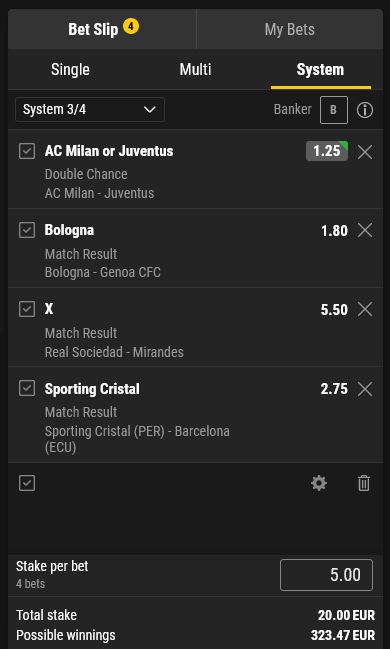
Lines, differentials, totals, spreads will all look different depending on where you look. In the NFL, you might not think that .5 points is a significant. But you’d be wrong. So shop the numbers.
Don’t say yes to the first line you see.
Shopping the numbers will give you a better idea of potential outcomes and allow you to make a well-rounded decision on your bets.
What else? Well, let’s start with something basic.
Bet the Underdog at Home
There is probably no better bet in sports than playing an underdog at home
You might think betting on the favorite is the obvious option every time but you’d be wrong. “There is probably no better bet in sports than playing an underdog at home,” says Morey “Doc” Moseman, a professional gambler and sports consultant with DocSports.com for nearly 40 years. “Teams play inspired ball at home.
Win Place Show Betting System
Slim underdogs regularly win outright.
Big underdogs often find ways to cover the spread and they rarely give up toward the end of a game in front of the home crowd.”
To revisit a favorite example, the Chiefs tend to claim the edge in the majority of their home games, no matter their status on the betting lines.
Why?
Because there’s magic at Arrowhead.
There’s more to lose when you’re playing before 150,000 of your fans’ scrutinizing eyeballs.
Here’s a list of some of the other worst betting mistakes you can make:
- Chasing your bets
- Getting vindictive
- Trying to win back losses
- Go after big wins to recoup losses
- Overly-promising wagers.
Betting Guidethe Place To Win System
It’s like a night of heavy drinking. It might sound tempting beforehand. But the next day you’re likely to have some regret.
Remember that betting is a mathematician’s game.
There’s no large place for emotion in this game.
Betting Guide The Place To Win System For Small Business
When it comes to the NFL, upon which more bets are placed than any other sport in America, that goes double. The oddsmakers have one job — and that’s to know their shit.
Betting Guide The Place To Win System Error
The key to beating them is knowing yours too.